
Asbestos was widely used in Australian construction from the 1940s through to the 1980s, progressively phased out before a total ban on manufacture, import, and use took effect on 31 December 2003. Any building or structure built or refurbished before that date may contain asbestos-containing materials (ACMs).
Because asbestos cannot be reliably identified by sight alone, laboratory analysis is the only definitive method of confirming its presence and identifying the fibre type. This matters both for regulatory compliance and for determining the appropriate removal and disposal pathway.
Important: Disturbing material suspected of containing asbestos without testing is a serious health and legal risk. If material looks friable, sprayed, or like loose insulation — do not sample it yourself. Contact a licensed asbestos assessor.
All three fibre types are classified as carcinogens. Laboratory identification tells you which type is present, which determines the removal classification and regulatory requirements.
The most commonly used asbestos fibre type, accounting for the majority of all asbestos used in Australia. Curly, flexible fibres. Found in cement sheeting, roofing, vinyl floor tiles, pipe insulation, gaskets, and friction materials.
Also found in: brake linings, clutch pads, sealants, Hardiflex, fibro
Straight, brittle fibres with very high heat resistance. Used extensively in thermal and acoustic insulation, ceiling tiles, pipe insulation, and fireproofing materials. More hazardous than chrysotile when fibres are released.
Also found in: cement sheets, partition boards, asbestos insulating board (AIB)
Considered the most hazardous fibre type due to the needle-like shape and small diameter of its fibres, which penetrate deep into lung tissue. Used in spray-on coatings, pipe insulation, steam engine insulation, and cement products.
Historical use in Wittenoom, WA — the largest crocidolite mining operation in Australia
Bulk material testing is the most common asbestos testing request — confirming whether a sample of building material contains asbestos before renovation, demolition, or disposal work commences. Results are required by licensed removalists and regulators, and are used to determine whether Class A or Class B removal procedures apply.
Analysis method: Polarised Light Microscopy (PLM) is used as standard for bulk material identification. Scanning Electron Microscopy (SEM) is available where PLM is inconclusive or trace-level fibres require characterisation.
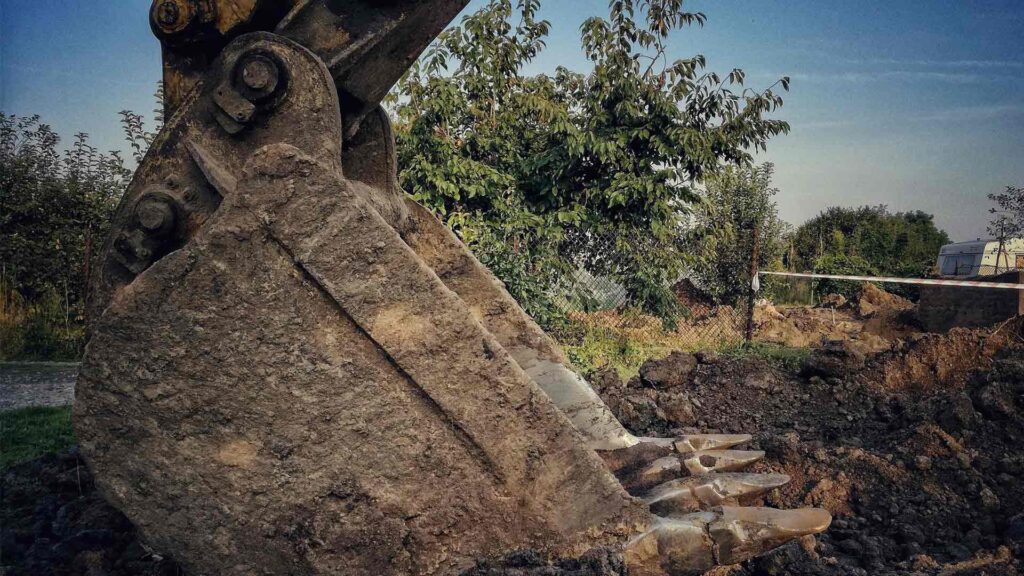
Asbestos-containing materials can be present in soil as demolition debris, illegal dumping, or historical use of fibrous materials as fill. The 2024 Sydney mulch contamination incident — which triggered the largest criminal investigation in NSW EPA history — highlighted just how widespread asbestos in fill and recycled material can be.
For site assessment, construction, and excavation projects, testing soil for asbestos is now standard practice under state-based contaminated land guidelines.
Air monitoring for asbestos fibres is required during and after removal works to confirm that airborne fibre concentrations are below regulatory clearance levels before an area is re-occupied. It is also used for ongoing occupational exposure assessment in environments where ACMs are present but undisturbed.
Note: Air monitoring for asbestos clearance must be conducted by a competent person per Safe Work Australia guidance. Contact us to discuss your monitoring program requirements.
For non-friable (bonded) bulk materials only — if the material looks loose, sprayed, or fibrous, do not sample it yourself. Engage a licensed asbestos assessor.
Not sure? If the material looks friable, sprayed-on, or like loose/fluffy insulation — do not sample it. These materials release fibres very easily and must be assessed by a licensed professional.
Wear disposable gloves and a P2 respirator. Dampen the material with water to suppress any dust.
Break off a thumbnail-sized piece using pliers (pad inside edges with a baby wipe). Don't create dust.
Place in a sealable plastic bag, then a second bag. Seal the exposed edge of the sample with duct tape.
Label the bag with sample type (e.g. fibre cement) and location (e.g. garage wall). Match to your COC form.
Wipe all tools with a wet paper towel or baby wipe. Place used wipes in a separate bag.
Send by courier or drop off to Sydney, Perth (MPL), or Melbourne labs with your completed COC form.
Results are delivered by email as a PDF report, detailing whether asbestos was detected, the fibre type identified, and the material description. For positive results, the report will specify the fibre type — Chrysotile, Amosite, or Crocidolite — which determines the applicable removal classification.
Payment: Visa and MasterCard accepted over the phone, or direct deposit. Results released on receipt of payment for non-account customers. Contact the Sydney lab on 02 9910 6200 or Perth (MPL) on 08 9317 2505.
Results within 2 business days of sample receipt.
No surcharge
Results by 6pm when sample received by 4pm the day prior.
50% surcharge
Results in 4–5 hours. Sample must be received by 11am.
100% surcharge
Contact our team to discuss your requirements, confirm the right sampling approach, and arrange COC documentation.