
Persons conducting a business or undertaking (PCBUs) have a legal obligation under the Work Health and Safety Act to manage workplace exposure to hazardous substances. This requires understanding what airborne contaminants workers are exposed to, at what concentrations, and whether those concentrations exceed the relevant exposure standard.
Envirolab provides NATA accredited laboratory analysis across the full range of occupational hygiene samples — from personal air monitoring filters and sorbent tubes through to biological samples and microbiological swabs. We also supply sampling media to occupational hygienists and industrial hygiene consultants.
Airborne dust is one of the most common occupational health hazards, particularly in mining, construction, quarrying, and tunnelling. Dust particle size determines where in the respiratory system particles deposit - inhalable dust includes all particles that enter the nose and mouth, while respirable dust refers to the finer fraction that penetrates deep into the lung alveoli, where it can cause permanent damage.
Note: The WEL transition (December 2026) includes revised limits for several dust fractions. Contact us to confirm which limits apply to your monitoring program post-transition.
Respirable crystalline silica (RCS) is one of the most significant occupational health hazards in Australia. Prolonged inhalation of respirable silica dust causes silicosis — a progressive, incurable, and potentially fatal lung disease. High-risk activities include tunnelling, quarrying, stone benchtop fabrication, sandblasting, and construction drilling.
Envirolab is NATA accredited for the analysis of respirable crystalline silica in the two most common forms found in workplace environments:
Engineered stone: Silicosis in engineered stone (benchtop) workers is a significant occupational health crisis in Australia. Engineered stone products can contain up to 93% crystalline silica — far higher than natural stone. Regular RCS monitoring is mandatory in this sector.
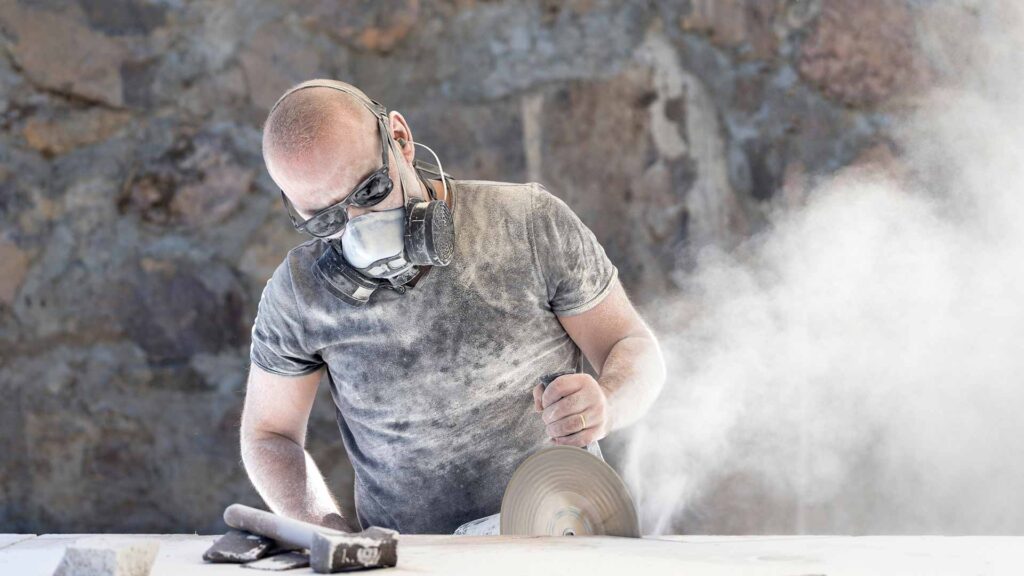
Occupational exposure to airborne metals and metalloids occurs in a wide range of industries — copper and lead smelting, wood treatment, metal fabrication, welding, waste incineration, and fossil fuel combustion. Many metals are acutely toxic or carcinogenic at elevated concentrations, making regular monitoring an essential part of workplace health management.
Arsenic in urine: Biological monitoring for arsenic via urine is available where inorganic arsenic exposure is suspected — particularly relevant for smelting and wood treatment workers. Contact us to discuss biological monitoring programs.
Airborne solvent vapours arise from industrial processes, cleaning operations, surface coatings, printing, and chemical manufacturing. Employers are legally required to assess and control worker exposure to hazardous vapours — regular monitoring is essential where chemical use is ongoing.
Toxic inorganic gases and fumes can arise from welding, chemical processes, mining operations, and combustion engines. Underground mining environments are particularly high-risk for diesel particulate matter (DPM) accumulation, where ventilation constraints limit dilution of exhaust emissions.
Diesel Particulate Matter (DPM): Analysis by elemental carbon (EC), organic carbon (OC) and total carbon (TC) fractions. Particularly relevant for underground mining, tunnelling, and confined space operations where diesel engine exhaust accumulates.
Asbestos air monitoring is required during removal works, following disturbance of asbestos-containing materials, and for clearance testing before a controlled area is re-occupied. It is also used for ongoing occupational exposure monitoring in buildings where ACMs are present but undisturbed.
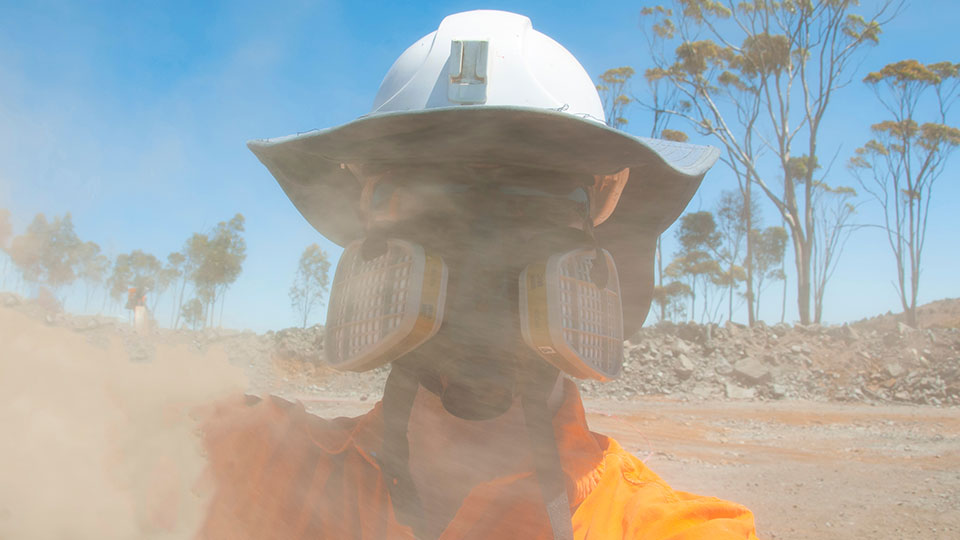
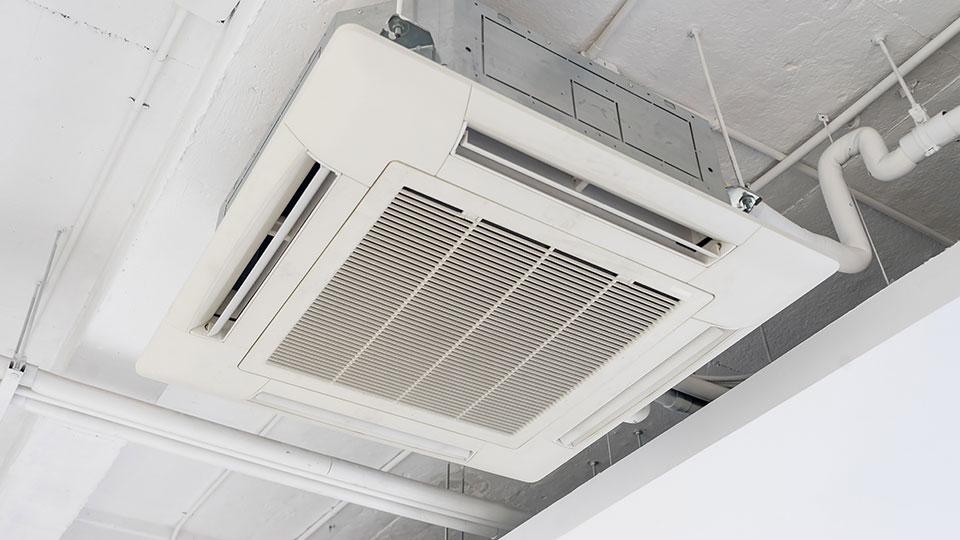
Biological contamination of indoor air by bacteria and fungi can cause adverse health effects including allergic reactions, respiratory illness, and in severe cases, hypersensitivity pneumonitis. Healthcare facilities, laboratories, food processing, and buildings with water damage or poorly maintained HVAC systems are at highest risk.
Moisture-related issues — water leakage, high humidity, and contaminated cooling coils and humidifiers — create conditions favourable for microbial growth and dispersal through ventilation systems.
Emerging contaminants associated with tyre wear are receiving increasing attention due to their potential impacts on aquatic ecosystems and environmental health. As tyres age and wear during normal road use, chemical additives and tyre-derived particulates are released into the environment, where they can be transported through stormwater systems into waterways, soils, and sediments.
Recent research has identified tyre wear compounds as contaminants of concern, particularly in urban catchments and areas receiving significant road runoff.
Analytical Services
We offer NATA-accredited testing for tyre wear contaminants in a range of environmental and industrial matrices, including:
6PPD-Quinone (6PPD-Q) is a transformation product formed when the tyre additive 6PPD reacts with atmospheric ozone. 6PPD is widely used in tyre manufacturing to protect rubber from degradation and extend tyre life.Studies have shown that 6PPD-Q can be highly toxic to certain aquatic species, particularly salmonids, prompting increased regulatory and scientific focus on monitoring its occurrence in the environment.
Hexamethoxymethyl Melamine (HMMM) is a tyre-associated chemical used in rubber manufacturing and is increasingly being detected in stormwater, surface waters, and urban runoff. Environmental monitoring studies have linked HMMM to potential ecological impacts on aquatic organisms, making it an emerging contaminant of concern for regulators and industry.
Envirolab supplies a comprehensive range of sampling media and equipment to occupational hygienists and industrial hygiene consultants. Correct sampling media selection is critical - using the wrong tube or filter type for a specific analyte will compromise results regardless of analytical quality.
Not sure what you need? Contact our team and we'll advise on the appropriate sampling media and analytical method for your specific monitoring scenario, in accordance with AS and Safe Work Australia guidelines.
Charcoal tubes, silica gel tubes and other media for vapour and gas sampling.
Pre-inspected for pin holes. Quartz filters for Diesel Particulate Matter (DPM).
IOM inhalable dust sampling heads and standard respirable dust cassettes.
3M vapour badges for solvent monitoring. Formaldehyde passive monitors.
Passive inorganic mercury reusable capsule holders and sorbent capsules.
Funnels, stoppers and Winchesters for settled dust deposition sampling.
Talk to our team about your workplace monitoring requirements — we can advise on sampling methods, supply sampling media, and turn results around fast.